


- Erin Spineto

- 5 min read

As we prepare for the One Drop Caicos Adventure in June 2017, we are doing a ton of training. These training diaries are stories from the field and things I have learned from my time in training.
For each new expedition I go on, I am tasked with developing a training plan that will get me into shape so that I can complete the trip safely. No one wants to show up for a trip underprepared.
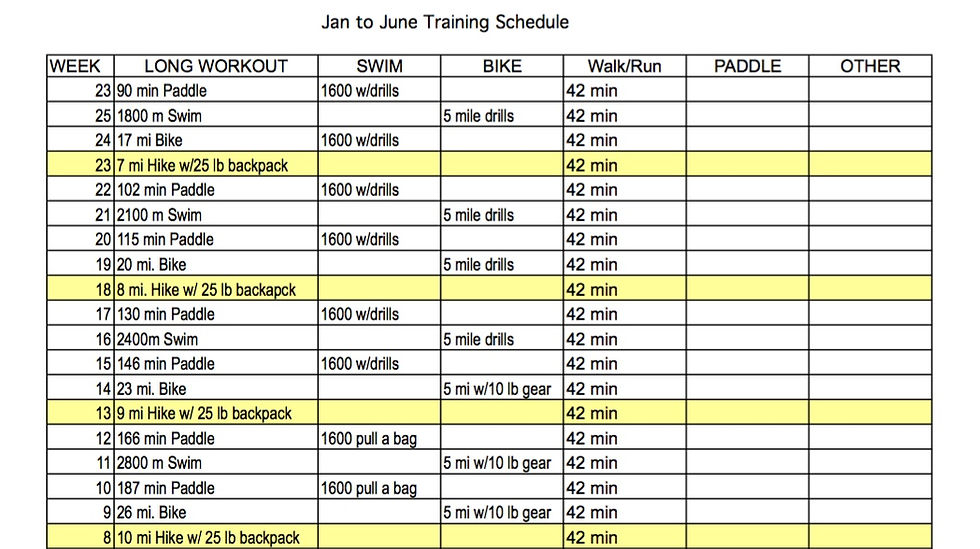
I have posted a portion of my training plan here and here with an explanation below in hopes that it may impart some wisdom when you have to build a training plan of your own.
Although each trip is different, there are some principles that apply to any training plan.
WHO IS TRAINING?
You should always pick a training plan that fits you.
I have learned through plenty of trial and error, with my thyroid issues, asthma, work schedule and taxi driver schedule (I have two very active kids), that my body cannot handle a seven- or even a six-day a week training schedule. I will go into over-training very quickly and will miss more weeks recovering than if I just worked out less. So I usually shoot for 3 days a week with one VERY quality, long workout each Sunday.
My husband, on the other hand, needs a seven- to ten-a-week training schedule, with his first workout of the day being a 5 a.m. swim. His body won’t reach its peak unless he pushes this hard. So you need to assess your body, your mental training style and your current life-stress load (work, school, dating, other responsibilities) and pick a plan that is reasonable. You should choose a plan that will allow you to complete 90-95% of the workouts.
THE PRE-SEASON OR BASE TRAINING PHASE
The Pre-season is set up to take me from where I am now to the base level of training that starts six months before an expedition. The most important thing to do in the pre-season is to get your body used to each sport and to learn the PROPER TECHNIQUE for each sport. Now is the time to get out that YouTube app and watch TONS of form videos. Then try to do the drills at least once a week. There is no faster way to get an injury than having bad form.
For this trip that means that by the end of the Base Period on Jan 1, I should be able to paddle for 90 minutes, bike for at least 15 miles, swim 1700 meters straight, and hike for at least 6 miles with a 25-pound backpack on.
I have more experience with long distance paddling, and I know that is usually where I end up with the most overuse injuries, so I won't be doing many paddle workouts until January.
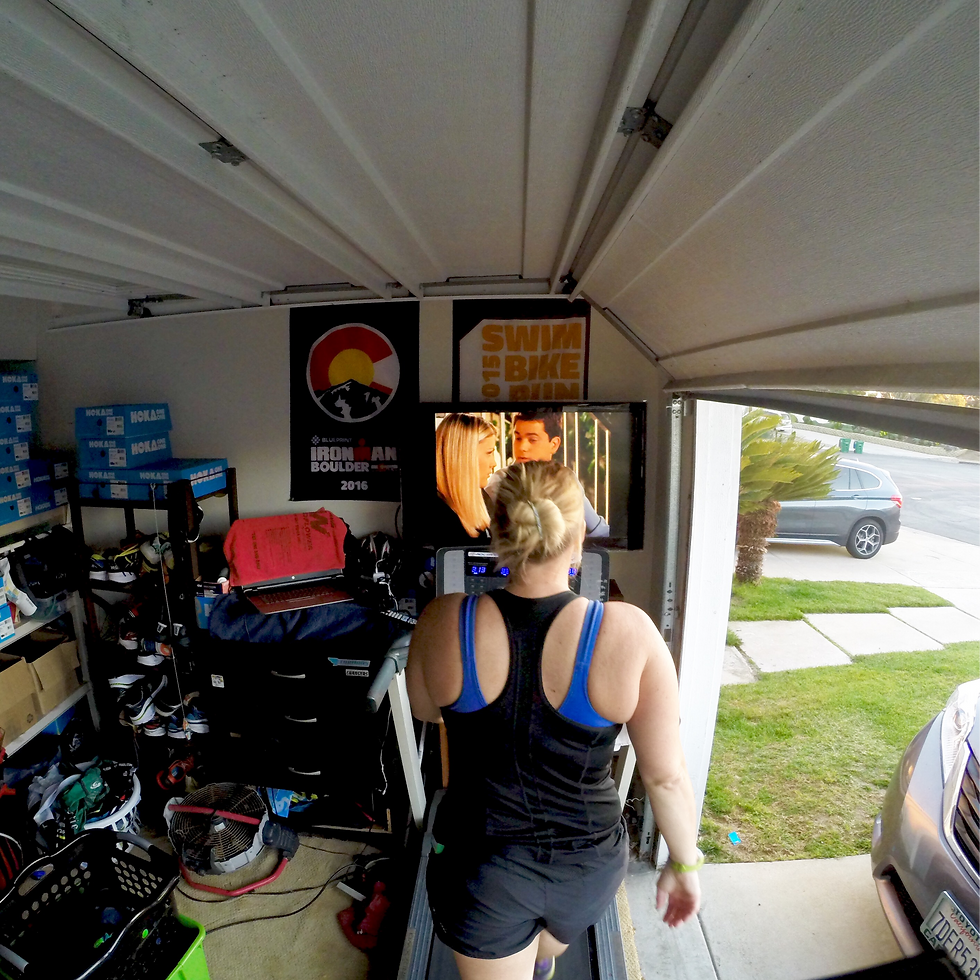
I spend more time walk/running than the other discipline because it is my weakness and because I can do it at home on the treadmill even after it’s dark outside, without having to worry about someone watching the kids. It is always good to work on your weaknesses in the Base Phase of training. And it never hurts to develop a plan that you know will fit into your lifestyle.
If you’re wondering why I always do 42 minutes of walk/running, it's because that’s how long a full-length episode is of the horribly cheesy show I watch while on my treadmill.
SIX MONTHS PRIOR TO TRIP
One of the most important parts of a training plan for a long-distance endurance event is the long run, or long paddle, swim, or hike. For the Jan to June Training Plan I have listed the long workouts for each week. These are mandatory workouts. I usually try to do them on a Sunday since I have more time then and make sure that I never wuss out on one of these.
These workouts should be done slow. At a speed where you feel like you could go on forever. You want to find the pace where your body can clear and get rid of the lactic acid your muscles produce during exercise faster than it is produced. At this speed, you won’t end up with any lactic acid buildup, which means you can go for much longer. This is the “you could talk in full paragraphs or almost sing” pace.
HOW TO FILL THE REST OF THE WEEK
For the rest of the week, once again, try to find out how many workouts your body and life can handle. Ultimately, it would be best to do each sport at least once a week. The other workouts during the week will be shorter, more in the 40-120 minutes range and focus on form or some speed.
Swimming will present an interesting challenge for this trip. On day three, we will be traversing nine islands. So we will hike the length of each island and then swim between islands, contending with the currents and pulling our waterproof backpacks behind us.
Around week 12, I will start to practice with my setup to pull my bag behind me. The dry backpacks will contain all of our gear and be floated behind us with a sort of strap that attaches to a waist belt.
Starting at week 14, I will get used to riding a cruiser with some weight on it, either in a basket on the front or in a backpack. It will change how I balance and will usually work my arms a little more, so I will have to get used to it.
I will also spend some time around week 12 getting used to a SUP with 30-40 lbs of gear on the front. I will probably start to play with the actual gear I will bring on the trip. Gear tends to move around and there are hacks you can work on to make sure it stays balanced and tied down well. A lot of that knowledge comes from just playing with different configurations and seeing how it works with your stuff.
I will also try to spend some time in a place with waves or chop. Balancing on a board with chop is a skill best learned at home before the trip and can only be learned by spending a lot of time in the chop.
I will find some super windy days and get used to paddling into the wind, with the wind, and at a 90-degree angle to the wind. These all feel very different. The wind will be at around 12-15 mph each afternoon on our trip. Most of the time it will be at our backs, but it can come in from the side or ahead of us too.
PERIODIZATION
Every fifth week, fourth for the first month, will be a rest week. This is the week that you back off on workouts, cutting both intensity and time, so that your body has a chance to recover. This is the most important week of all five. It is the time when the last four weeks of work pay off.
TAPER
The last two weeks before I go will be taper weeks. This means the overall distance of my workouts and frequency will reduce, but not the quality. The first week should be at 75% of the total distance and frequency. The second week should be at 50%.
WHEN IN DOUBT...
If you haven't done a few pre-built training plans, it is always a good idea to start there, especially for common distances like a 5k or a half-marathon. Use those until you get a good idea of what you are capable and what works for you. Then you can start to use your knowledge to build plan for yourself.
When you get into more rare sports or distances, it always pays off to ask people who are more experienced than you. They have gathered much wisdom that can be critical to your success.


